

When I was young, I went to the National Museum for the first time during a high school field trip. Back then, it was just the Fine Arts building with paintings crammed on the bottom galleries and artifacts and everything else crammed on top.
But now, with the Anthropology and Natural History museums opening up too, there’s a lot more space for everything and everyone. I saw the National Museum of Natural History when my cousin came over a couple of years ago. We just went to the National Museum of Fine Arts building recently. Anthropology comes next.
What to see at the Philippine National Museum of Fine Arts
What once held everything from paintings to sculptures to artifacts and more, the National Museum of Fine Arts building now focuses on displaying fine arts pieces—think paintings, sculptures, and the like.
The Spolarium
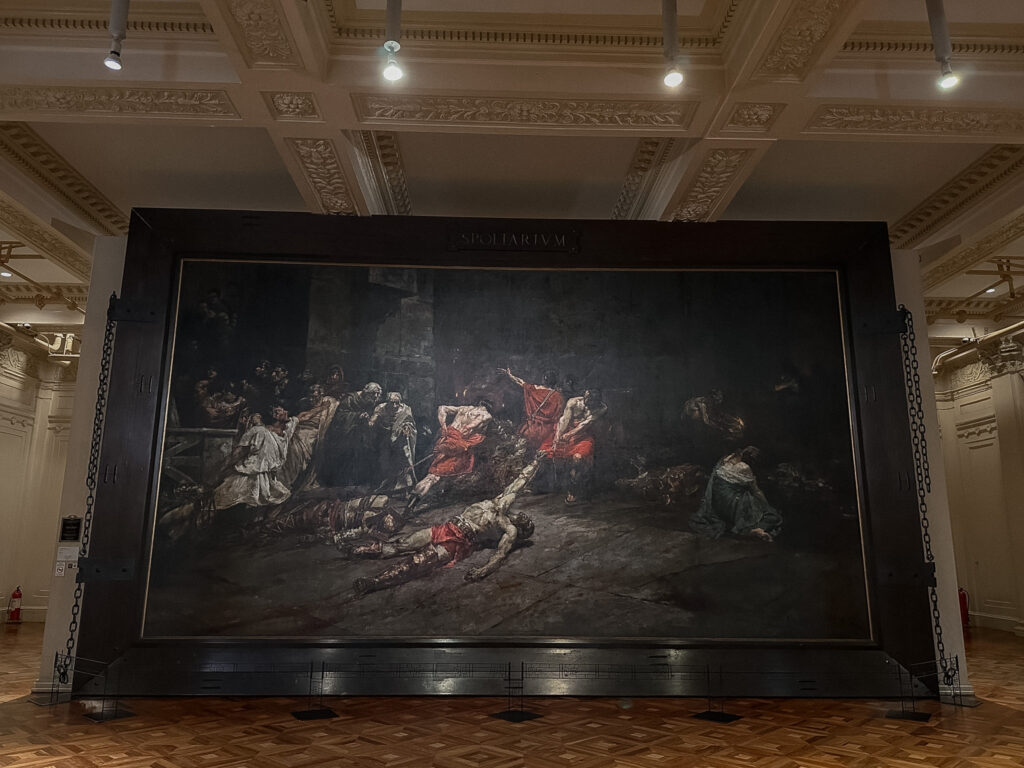
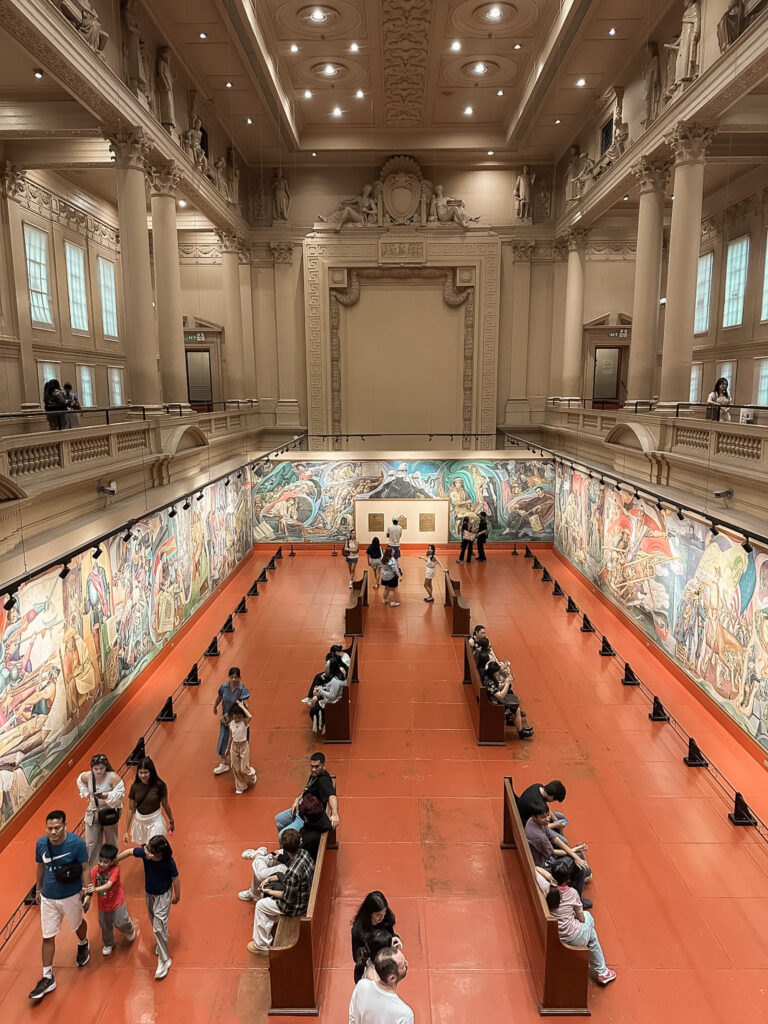
For starters, there’s the famous Spolarium by Juan Luna, with its signature wooden frame and rough iron chains that lend to the whole vibe. When I visited several years ago with my colleagues, the halls were much brighter, the painting lit from different angles by the sun streaming in through the windows. Now, they’ve covered the windows and toned down the lighting to give the hall a moodier feel. They even use warm lights, which gives the hall—and the painting—a more somber effect.
But it’s still impressive. Standing at the center and looking up at the painting, I’m once again amazed with the details and depth. No wonder why it’s often referenced when talking about Filipino painters or artists. The fact that it’s the very first thing you see when you walk through the doors of the National Museum of Fine Arts building is such a grandiose gesture.
Galleries upon galleries of paintings and sketches and more
When you exit the large hall that houses the Spolarium and a few other paintings and busts, you’re free to explore the other galleries of the museum however you’d like. From the second floor all the way to the fourth, there are about 29 galleries of different sizes and different exhibits.
The second floor alone (where you enter) has twelve galleries filled with various paintings and sketches by different artists. You’ll find galleries dedicated to Juan Luna and Felix Resurreción Hidalgo, who were contemporaries. You’ll find Amorsolo’s beautiful paintings, his almost life-like portraits, and all his sketch studies, which were fun and interesting to see, especially the ones with his notes on them.
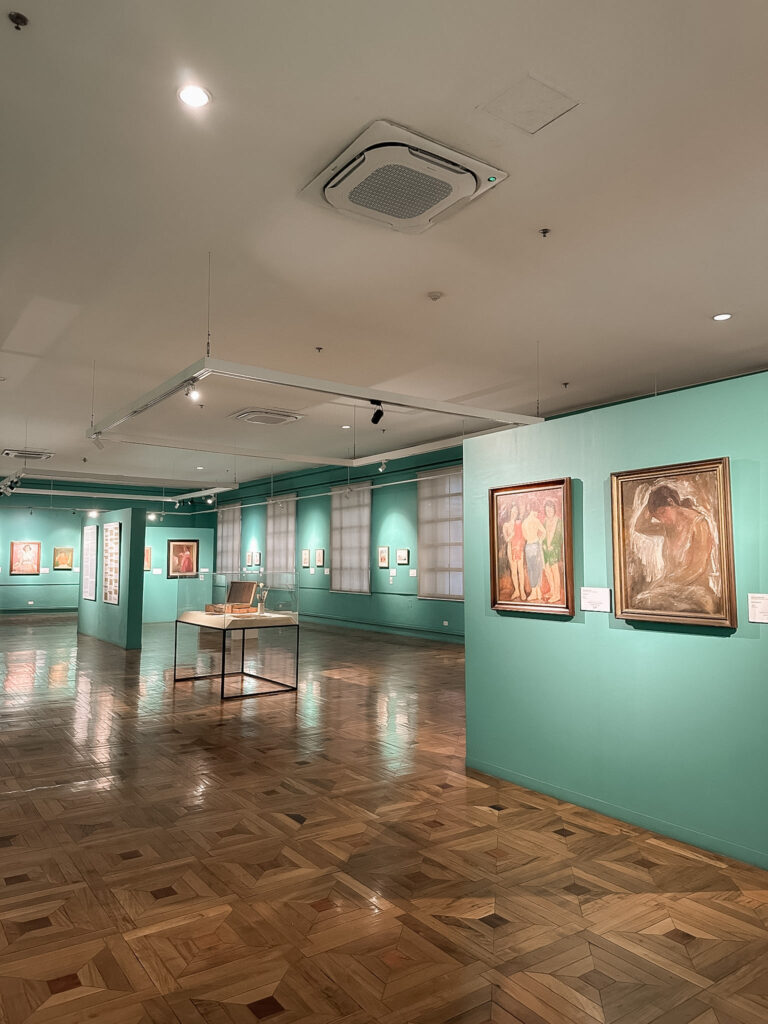
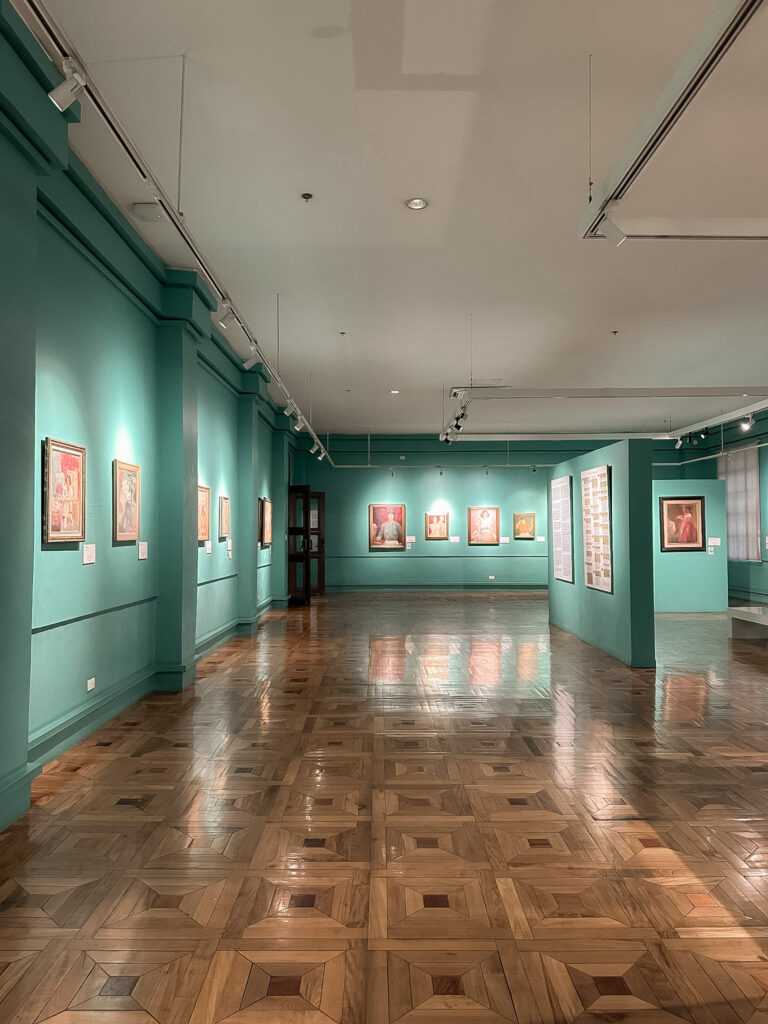
The museum is curated in such a way that allows you to see a bit of the Philippine history in terms of art. My sister is an artist, so she would point out some details and give us some information as we wandered through the halls.
For example—acrylic paint wasn’t discovered till the early 1900s, so you won’t see it Luna’s or Hidalgo’s or Amorosolo’s work or the work of anyone born during that time. Before the camera was invented, portraits were the only ways to capture people, so painters back then made them as lifelike as possible.
A lot of the paintings were about light and beauty—a stark contrast against the Spanish colonization and tragedy of the era. Perhaps, we said, it was their way to deal the darkness of their times. A way to escape what was happening, a way to remind themselves of the beauty that once existed and that could exist despite the events of the present.
Also, those artists sure were productive! Whether it was simply sample sketches or paint studies or finished pieces, they did a lot. Then again, if you think about it, given that the fatality of life was around the 30s in the 1800s to early 1900s. There was probably an urgency of sorts.
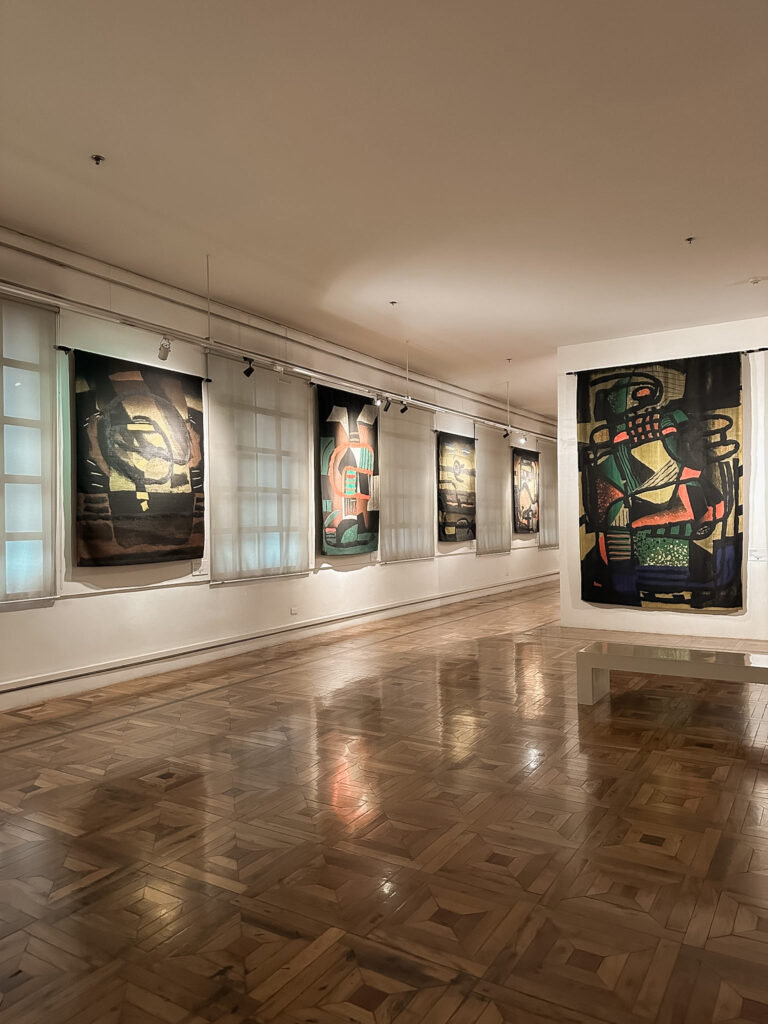
There was also a gallery filled with cloth tapestries by Federico Aguilar Alcuaz—a non-woven textile work called art protis. Apparently, the colors, patterns, and designs you see aren’t painted or woven onto the fabric. They are “assembled” for lack of a better term, the way felt pieces are made—with a needle poking incessantly across the fabric until it melds together. Isn’t that fascinating?
Note: Several of the galleries at the National Museum of Fine Arts are in partnership with a different organization or agency. For example, you have the GSIS hall, the Philippine General Hospital Hall. Some paintings have also been loaned to other museums and galleries, so you may seem the photo of a particular painting and some information on where it is at the moment. Imagine that—paintings go on tour, too!
Busts and sculptures
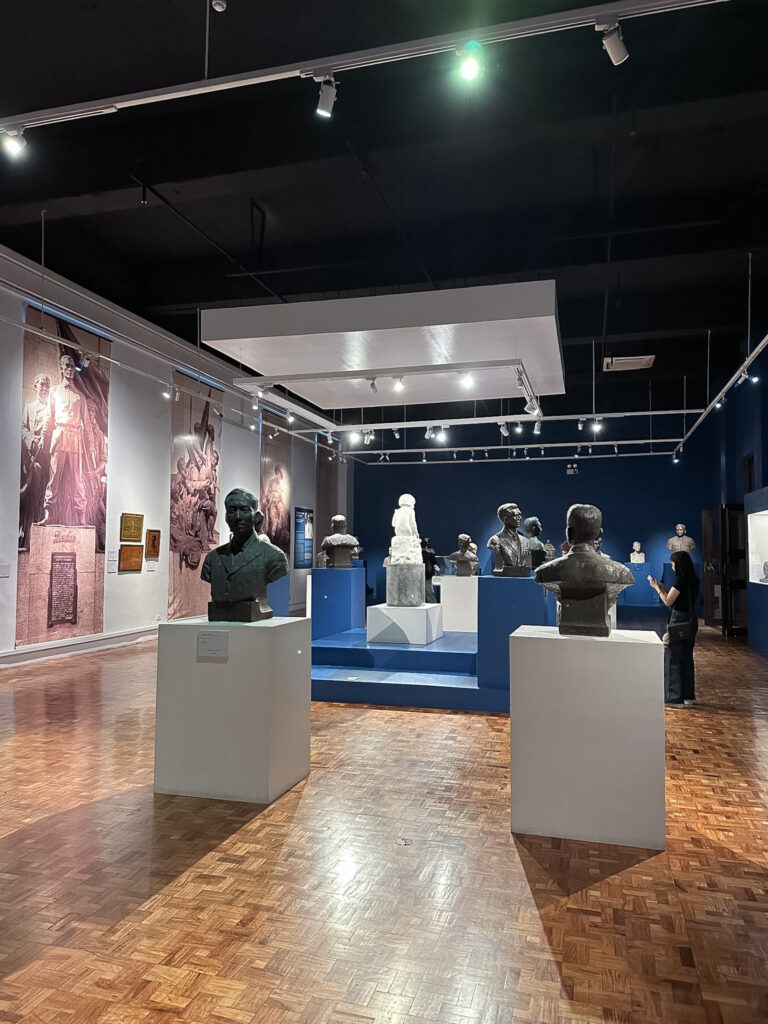
Paintings aren’t the only thing you’ll see. You can also find sculptures, busts, and other art forms at the National Museum of Fine Arts building. I’m more a painting person than a sculpture person, but still it was fascinating to see the different kinds of sculptures and the mediums they used.
There’s an entire room of busts by Guillermo Tolentino, a National Artist of the Philippines for Sculpture. Some of the halls on the second floor also have sculptures in various sizes and subjects.
Special exhibits
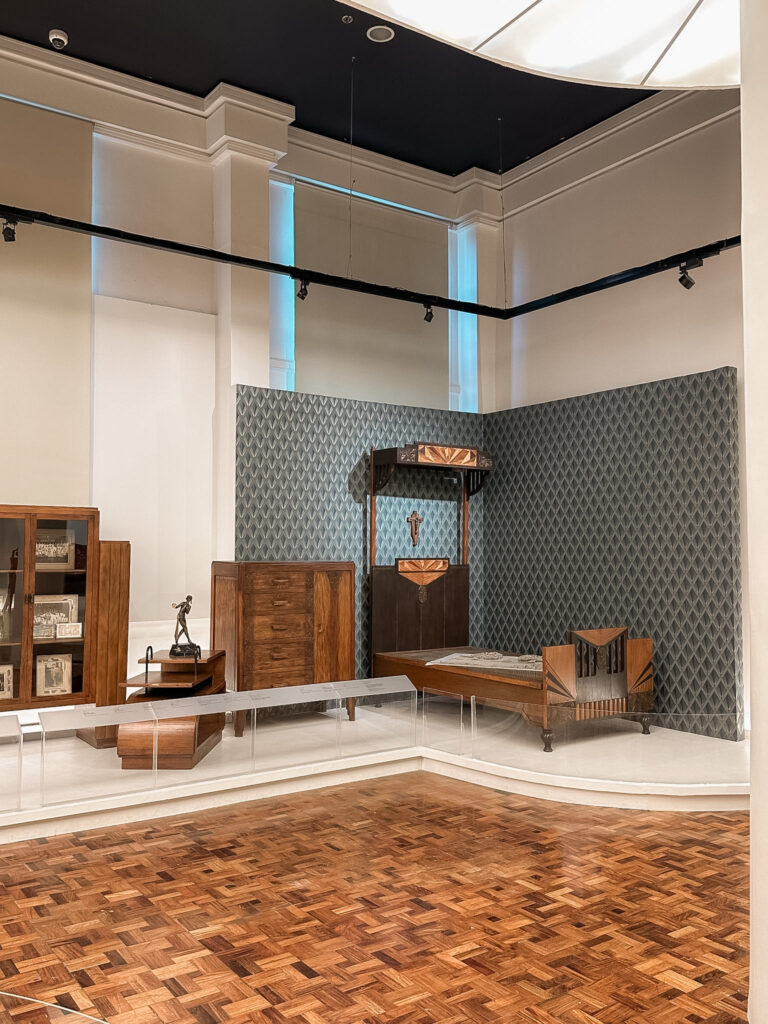
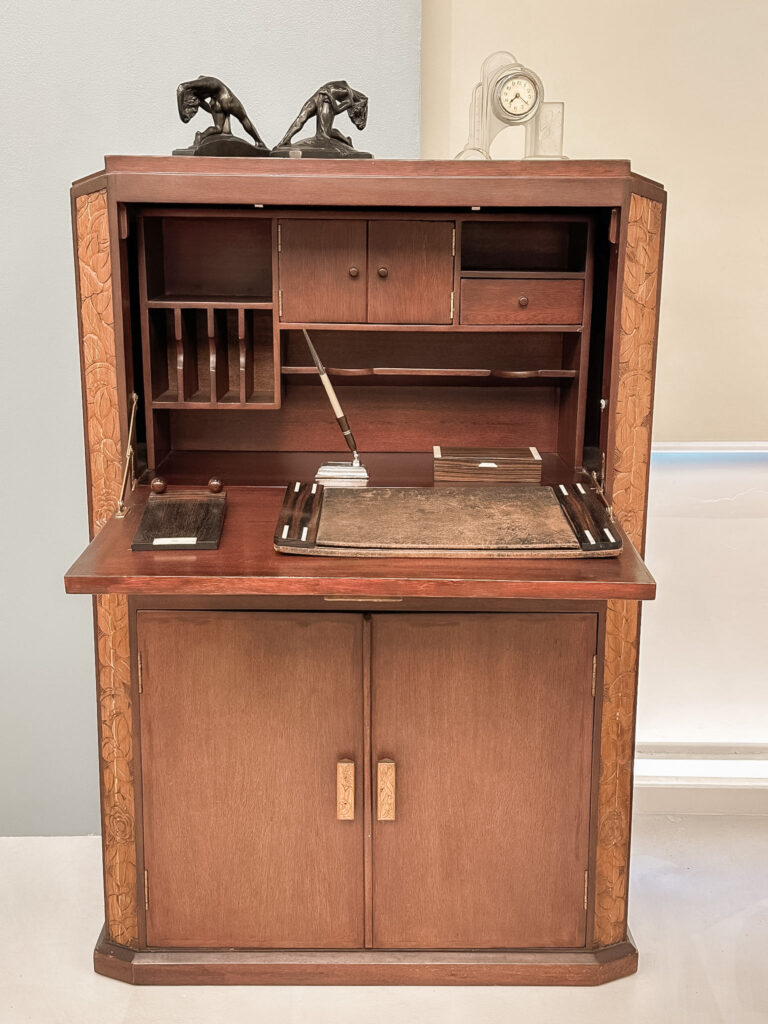
When we went to the National Museum of Fine Arts building, they had a special exhibit on Art Deco, which was a lot of fun to see. It was more furniture and clothes than paintings. Old cameras. Radios. A desk that I would very much like to have. They had little write-ups so you could learn more about them.
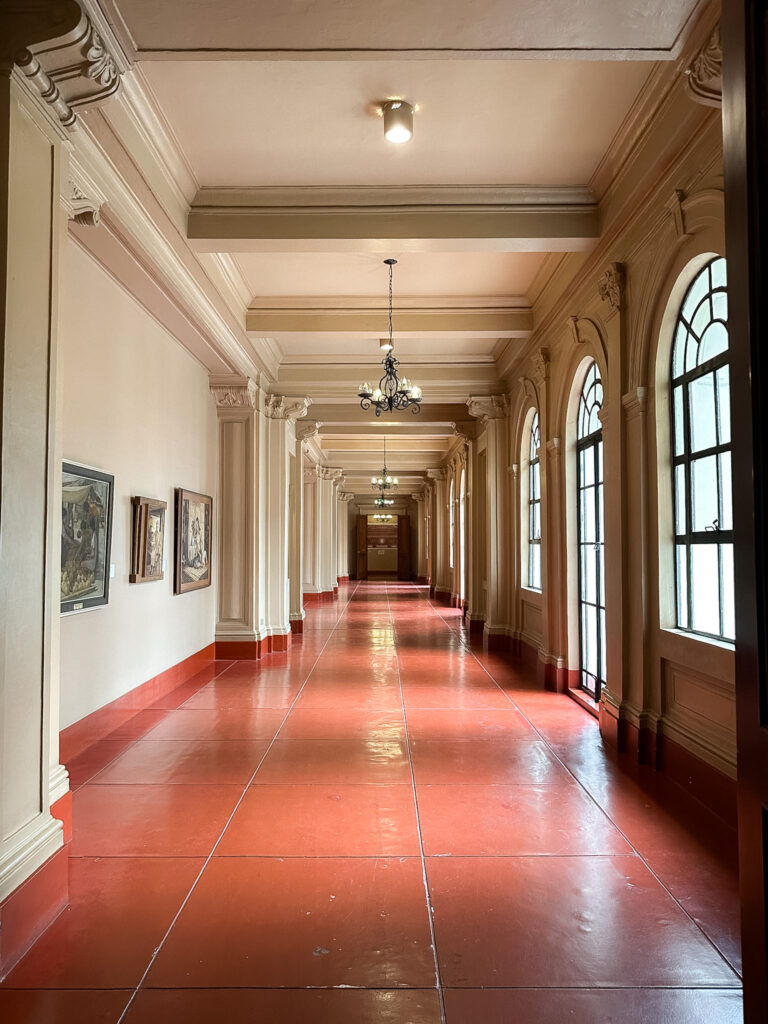
The first floor, which was supposed to some exhibits, was temporarily closed. Some wings on the highest floor (the fourth) were closed too. On the third floor is the old senate hall which is enclosed by a mural detailing Philippine history on three out of four sides.
Some notes about the National Museum of Fine Arts
Just some things you might help you plan your visit to the National Museum of Fine Arts.
Bring a small bag.
If you have a bag bigger than the allowed size (13 x 17 inches), you’ll have to leave it at the baggage counter. No water allowed inside either and there aren’t any drinking fountains, so make sure you’ve had enough water.
Allot at least three to four hours to visit the entire museum.
We’re slow travelers, mellow adventurers. We don’t like rushing and we like looking at the exhibits rather than just seeing them. If that’s your type of travel—and I certainly hope it is—then take all the time you need. Read up the descriptions, pore over the art styles, look up the histories of the artists and what was relevant during those times. It will take your visit to an entirely different level.
If you get tired, you can rest on the benches in the hallways. Some of the exhibits also have low seats where you can sit down and look up at the paintings while resting your legs and catching your breath.
Sadly, the museum no longer has physical brochures or maps—at least, that’s how it is for the National Museum of Fine Arts. Not sure about the other two. No tickets even for this junk travel journaling aficionado. You can, however, download their app or scan the QR codes that they have beside the paintings. (Museo Guide App on iOS and Android)
You may be curious about the coffee shop at the National Museum…
We were going to try it out because my brother has been exploring coffee beans and making coffee, especially for coffee shops that sell their own beans.
But! It was too crowded and too hot. There wasn’t a place for us to stay and the fourth floor area seems to not have the kind of aircon that the other wings have. It’s located at the topmost floor. In the summer, the heat can settle like a cloud and make you feel sleepier. We decided to have our coffee elsewhere instead.
FAQs about the National Museum of Fine Arts
When’s the best time to visit the Philippines National Museum?
If you’re like me and want to avoid the crowds, go first thing in the morning. Have a heavy breakfast or brunch and go straight to the museum. Most people arrive after lunch, around the 14:30 mark, so if you want to enjoy the museum at a more leisurely pace, the earlier you go, the better.
Are the museums close to each other?
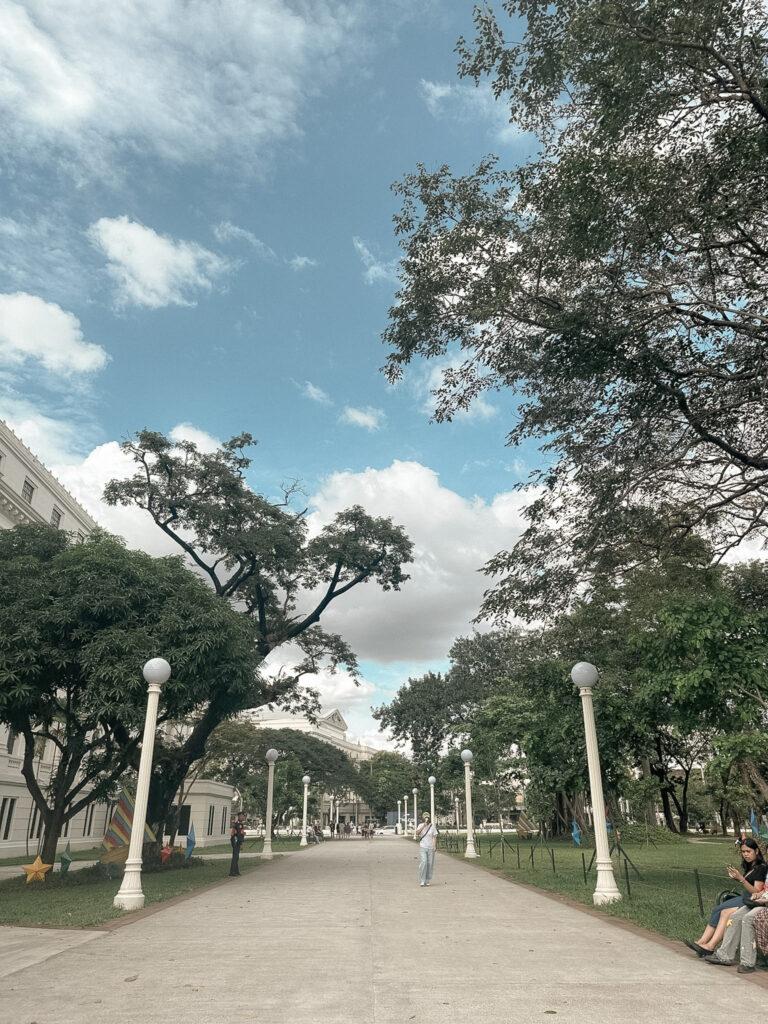
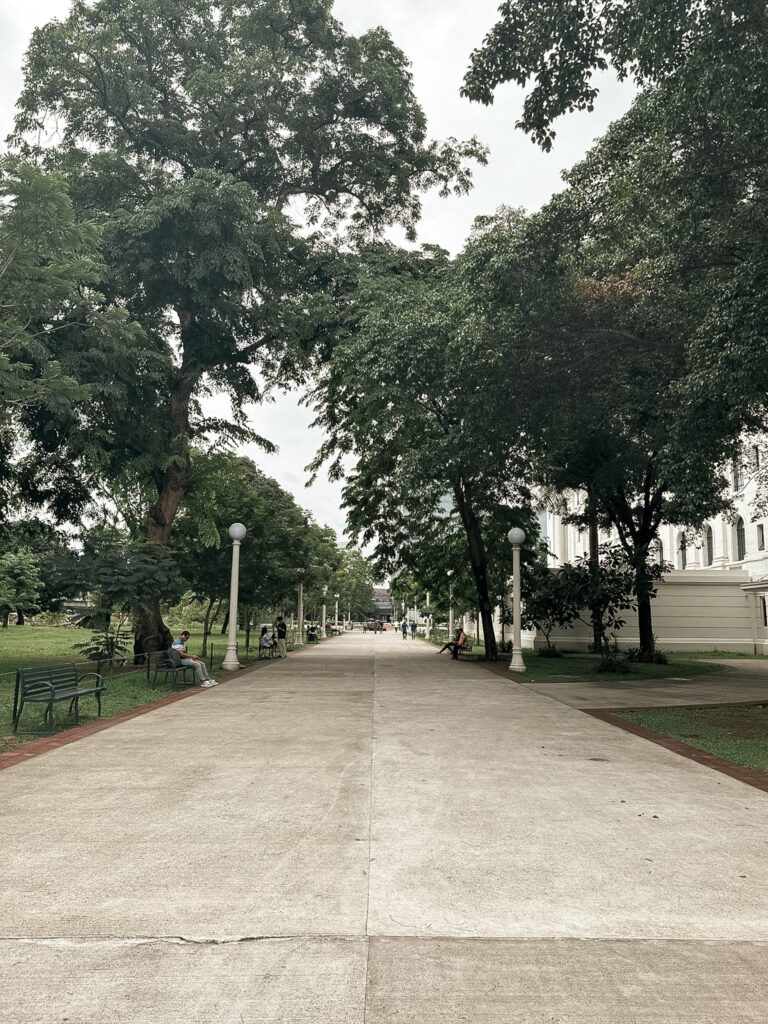
Yes, the National Museum of Fine Arts, Anthropology, and Natural History buildings are close to each other. Between Anthropology and Natural History is a spacious park where you can enjoy the breeze—or burn in the heat. You can walk around, take photos, and the like. I’m not sure if you can have a picnic, though. It might be better to eat at some of the nearby restaurants instead.
For the National Museum of Fine Arts building, you’ll have to make your way to the Anthropology side, cross the street, and then walk some ways up to the Fine Arts entrance.
Important note: When you cross from the Anthropology building to the National Museum of Fine Arts building turn left. Turning right takes you the longer way around and by a street filled with smog and stench of urine (it is Manila after all).
Is there an entrance fee to the Philippine National Museums?
There is no entrance fee, but you’ll have to register your names. Just give your ID and say how many people are in your group.
Can you visit all three museums on the same day?
You can if you’d like, but I wouldn’t advice it unless you want to run through the exhibits—which makes it pointless to visit the museum in the first place. At most, you can try to split your visit into two days. The National Museum of Fine Arts alone was enough to take up more than half a day for us, so we’ll schedule other times to visit the National Museum of Anthropology and the National Museum of Natural History.
Instead, enjoy going through each of the museums at a relaxed pace. There’s no rush because they aren’t going anywhere. You’ll also gain a lot more knowledge when you stop and dive deeper into a painting or a particular exhibit.
You take such clean photos, Lyz! I also like how you shared both the artworks and the stories behind them, making the museum feel more approachable and interesting even for first-time visitors.
Thanks for taking us along on your museum visit!
Thank you so much! I had a great time exploring. Can’t wait to see the other two, too!