

Sometimes, it feels just like yesterday when I waved goodbye to my family, who had all come to see me off, the way only Filipinos do farewells. Where everyone comes to send you off—as if you are never coming back, when in reality, you are just going away for a while.
I was headed to Vietnam and Cambodia for three weeks for a “cross-cultural exposure”, the fitting activity to kick off my senior year in college, where I was taking up Intercultural Studies. Three weeks is short when you think about everything you want to see and do. But for a first-time traveler, three weeks is both daunting and exciting enough to give you butterflies in your stomach for the entire plane ride.
Since then, I’ve gone to many places, learned some things. I used to write about it, but life happens, and you forget that you used to have a website to record your trips. This year, however, marks 15 years since I sat on that plane for the first time, had my passport stamped for the first time, crossed borders for the first time. Can you imagine that! And so I want to revive my travel blog again, tell the stories I never told, and travel some more.
For now, I reflect on what travel has taught me and how they have shaped my worldview and made me a better person. These aren’t your unique travel hacks and tricks, but some learnings I’ve experienced while traveling—travel tips that could apply to anyone, whether you’re a first-time traveler or have been traveling a long time.
1. When you travel, a little research goes a long way.
I always love looking up the places I’m visiting next and creating an itinerary for myself. I have everything color-coded and categorized with tags to identify the various activities (Commute, Tourist Spots, Dining, Shopping, etc.) down to the last minute. Perhaps I can attribute it to my event-planning experience or to being a solid ISTJ.
Or maybe I get it from my dad, who is a professional Google Maps wielder. Before we go anywhere, he always researches where we’re staying, the nearby restaurants and stores, how to get to the nearest public transportation station, and all possible routes near our hotel or Airbnb.
You don’t have to come up with your own personal guidebook, but it’s good to know a bit about the place where you’re going. Research places you want to visit and even the cost of meals. Budgeting for your trip is an important task before you leave. You want to make sure you have enough money, especially for countries that use cash more than credit cards.
Learn about its culture and its people. If you don’t know the language, learn to say a few phrases, too. It can help you when you get lost or when you’re buying something. You don’t have to master grammatical nuances or know enough synonyms to put on a good debate. Simply learning how to say “please” and “thank you” is enough.
2. You can make plans, but be flexible.
There’s a Chinese word I learned recently that I’m taking into the new year: 留白(liúbái).
It means spaciousness or leaving space to make room for miracles or beauty. You see it most in traditional Chinese art forms, where there is a blank space meant to emphasize the subject or leave the viewer to fill in the blank with their imagination.
It’s okay to make plans, but you’ve got to be open to the beauty of spontaneous stops and a sprinkling of travel magic.
In my most recent trip to Thailand, we visited Kanchanaburi and the famous River Kwai. We wanted to experience the Death Railway with its rustic seats, peddlers hopping on board with all sorts of food, and the romanticism of slowly traveling to the countryside. We weren’t sure how we would get back to Bangkok—originally, we were thinking of taking the bus back for a faster trip. But towards the end of our Kanchanaburi stay, we thought—why not take the train back? Although some people warned us that it would be hot and sticky and tiring, we wanted to give it a try.
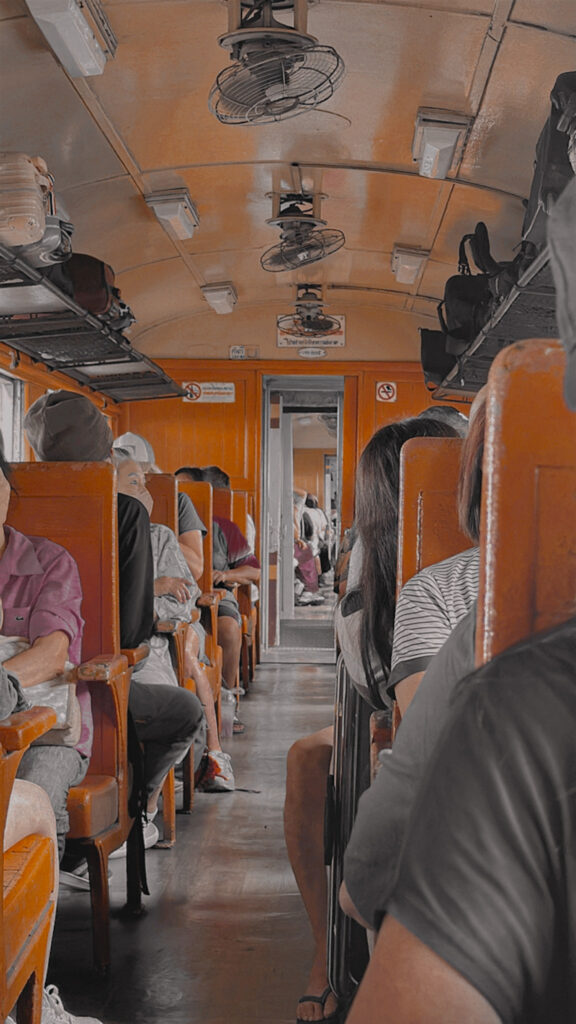
Best decision ever. It was a breezy train ride that felt shorter than the three hours it took. A little romantic, too. We gazed out the window, observing the small town and stations as the train passed by. We ate some snacks and talked to our seatmates. Three hours together in a coach makes for great conversations.
3. Also—be adventurous. Step out of your comfort zone.
Travel can be scary. And fun. But scary.
Especially if you’re going somewhere you’ve never been before, in a culture so different from your own. But travel is all about stepping out of your comfort zone, getting to see the world from a different perspective. It’s about trying new things, like a different food or learning a new activity or skill.
The thing is—if you never try it, you’ll never know whether you like it or not.
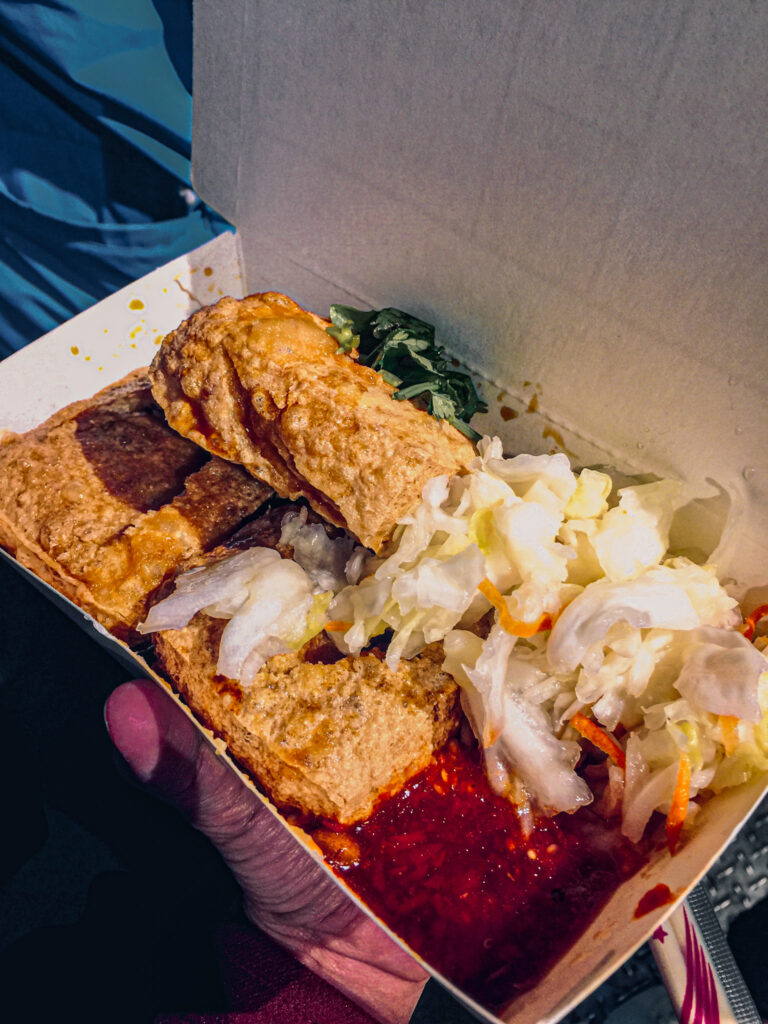
Trying another country’s local delicacies, for example, can be both scary and fun. When we first heard of Taiwan’s stinky tofu, we weren’t sure if we wanted to try it. Look it up on the internet and you’ll see conflicting opinions—some who love it and others who don’t. The smell is enough to make you hesitate for a while. But the taste? Ah, so delicious! It’s now a must-eat every time I go to Taiwan, particularly the little stall in Raohe Night Market.
4. When you travel, make sure you have contingency funds—and then some more.
You’re probably like, “yeah, yeah, common sense,” but travel isn’t something you do without preparing for it. Or saving up for it. No matter where you go, it always helps to have extra funds or travel insurance. You never know when you might need it.
One of my college professors once attended a conference abroad. During the sessions, he complained of stomach pain, but didn’t do much about it until he collapsed and had to be rushed to the hospital. As it turns out, he had acute appendicitis, and his appendix was close to bursting, which would have proven lethal had they not operated in time.
When you’re in another country, getting treated—much less operated on—can be extremely expensive. But because someone bought him last-minute insurance, my professor only had to pay less than a hundred dollars for tests or medicines not covered by the insurance provider.
5. Just because it’s different doesn’t mean it’s wrong. Just because it’s what you’re used to doesn’t mean it’s right.
We all grew up in different cultures, and those cultures have pretty much shaped our worldviews. And when you travel for the first time, it can be pretty much what they call a “culture shock”. Suddenly, you’re exposed to things you’ve never seen before, perspectives you’ve never imagined. You’ll see things that are vastly different from all you’ve ever known, all your life.
But just because it’s different doesn’t mean it’s wrong. It’s just that—different. And your culture isn’t the only right one either, just because you’ve known it all your life. It helps to talk to different people to gain a perspective on things.
One of my favorite and lifelong friendships is with a girl I met from Cambodia. We often message each other to exchange thoughts and ideas or to compare stories from our own perspectives, especially when it comes to womanhood. At first, I couldn’t understand and even felt upset when she shared that she had no choice but to work to support her family. Where I come from—aside from some snide remarks from nosy aunties during family reunions—people mostly leave you to do what you want. You can become a career woman or stay home to take care of your children, and no one will judge you for it.
6. Nothing teaches you independence the way travel does.
I used to be the kind of girl who relied on my dad to help me figure out routes because I had absolutely no sense of direction. During my first trip abroad, someone was guiding us, calling the shots.
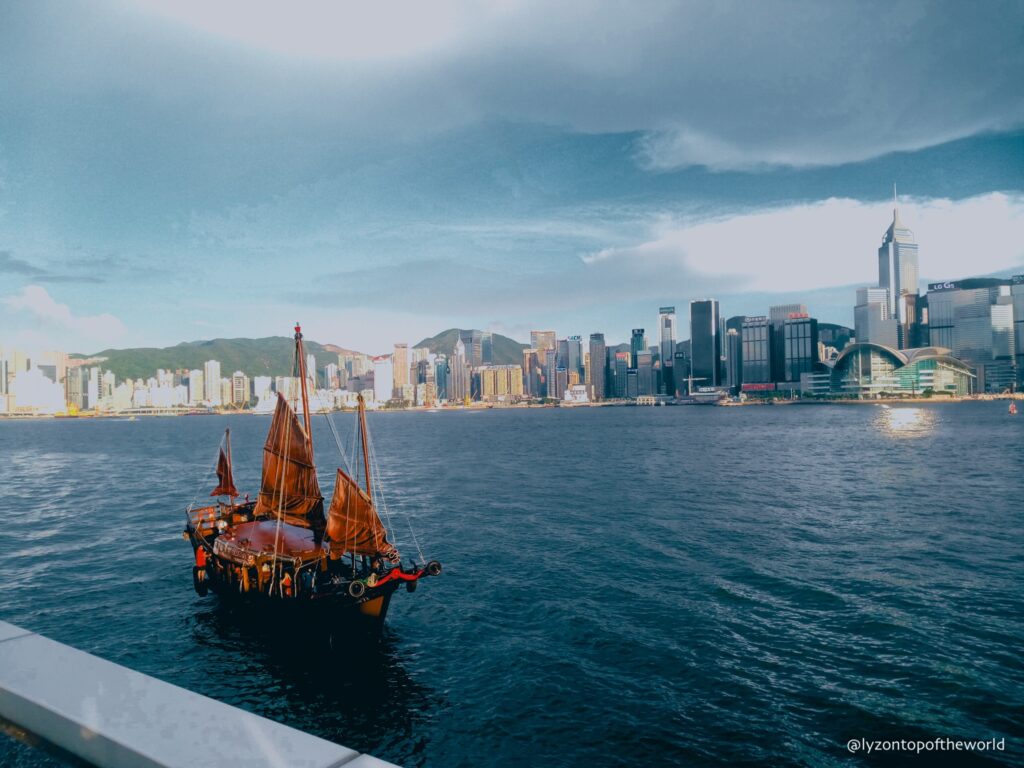
But pretty soon, I was the one with more travel years under my belt, so people would look to me for guidance. I had to learn how to read maps pretty well and pretty fast so we wouldn’t miss trains. I learned how to do my own research and build my own itineraries before going on a trip. One time, I was traveling with a group and we had free time. I decided to do a DIY walking tour around Hong Kong, but other people wanted to join. It was scary leading them, but they enjoyed it and said they liked how I planned my trips.
7. And nothing makes you feel more like you still have a lot to learn.
If anything, travel has a way of showing you how narrow your vision is or how small your circle is. The more you travel, the more you get exposed to things outside your world. You get to experience things you’ve never dreamed of. You get to try things you’ve only heard about. And it shapes you, changes you. It gives you a deeper understanding of life and the things around you.
8. Before you take a photo, try to be in the moment first.
I’ve got nothing against social media. I use it regularly, I like browsing through it. But I do have a bit of frustration towards those who ruin moments just for the perfect snap or reel. Trust me, you lose moments of wonder when you first think about how you will get the Insta-worthy photo to attract a good number of likes and followers.
Instead of whipping out your phone to post something, try being in the moment for a while. Basking in the sights and sounds and tastes and smells. Take deep breaths. Commit everything you experience to your memory (you’ll actually remember it better if you don’t take photos of it). I promise the experience will be vastly different.
As a matter of fact, I’d even encourage you to…
9. Keep a travel journal.
It doesn’t have to be perfect or Pinterest worthy. You want it to be something that will help you remember everything you’ve done and experienced during your trip. You can write in detail or summarize what you’ve done. You can stick stickers or stamp stamps from stations or sketch the scenery around you. Use it instead of taking photos, and you’ll remember your trip very differently.
10. Travel at your own pace and to the places you like.
There are museum people and shopping people and concert people and just-staying-in-the-hotel people and going-fast-from-one-activity-to-the-next people and DIY people and booking-a-tourist-package people.
The point is, we all have different travel styles. Don’t let people shame you for the way you want to travel. And no matter how attractive a certain “style” of traveling looks on a reel or TikTok video, it’s up to you to develop your own travel style and to build your own itinerary around it. If you try to match someone’s energy when it’s so different from your own, you will only get frustrated and end up hating traveling.
11. …but maybe sometimes skip the most touristy spots…
Some of the best places are the hidden gems. The ones that only the locals know of. The problem with tourist spots is that everyone goes there. And I mean everyone. So if you’re looking to appreciate some places at your own pace, you might end up disappointed.
But what if you were to meander down less-traveled paths? Skip the long lines, the Instagrammable spots? There, in the middle of the unknown, is where you might find treasure—perhaps in the form of a hole-in-the-wall restaurant. An ancient bookstore. Some locals whose friendship with you will last a lifetime.
I had a chance to visit Sydney a few years ago. After eating a delicious breakfast, my friend and I left our luggage at a luggage storage place because it was too early to check in. The nice old gentleman we left our luggage with told us that the weather was a beautiful one for a walk and pointed us down a lovely avenue. One of the side streets had this gorgeous brick building that we wouldn’t have seen if we had run around checking out the usual tourist spots.

12. …and be mindful of the locals.
As they say, when in Rome… But don’t just do as the locals do. Respect their place. You are a sojourner in a foreign land. It’s time to leave your entitlement back home (yes, I’m talking about you, Emily in Paris).
The problem with the influx of tourists to a certain place is that it disrupts the locals’ everyday lives. Craig Mod writes about how overtourism can be harmful because tourists will do just about anything to get the perfect selfie. They’ll storm quaint little roadside stores in Japan that look like they were lifted from Studio Ghibli, preventing them from doing business. Local will choose to go somewhere quieter and less crowded, and the tourists won’t buy anything from the stores either—driving those little shops out of business in the long run.
13. Don’t let travel mishaps get in the way of your friendship.
They say traveling with friends can make or break your friendship. I’ve traveled with both family and friends, and it requires a lot of patience and a lot of adjusting and a lot of giving in. The reality is—you all want different things. You want to go to different tourist spots. You all want different food.
And sometimes, being in an unfamiliar setting heightens your emotions, makes you more sensitive to your surroundings. Before you know it, you’ll be arguing about schedules, fighting about soap, and swearing to never travel with them again.
It takes a lot of patience, yes, but also understanding that this trip you’re taking is only for a few days, and you shouldn’t let it dictate how your friendship. Your trip is temporary; your relationship with the person will last longer than a few nights abroad.
14. …and if you’re traveling with companions, have a day away from each other.
This gold, gold nugget of advice is something my aunt taught me. Let’s say you’re traveling with a group of friends. It can get tiring and even stifling to do everything together all the time. Plus, everyone has different interests, and spending some time apart and doing your own thing can help you nurture those interests—and keep your friendship sane.
If you’re on a short trip, set aside one day where each of you can do what you want. For longer trips, take a break from each other every 3-4 days. Schedule things on your own, the things you’ve always wanted to do that interest you. Enroll in a cooking class, a pottery workshop, a meet and greet with some locals, or even go to that quiet little seaside town that you’ve been eyeing but couldn’t quite get your friends to be excited about.
15. Travel solo at least once in your life.
I’m putting this as the last because I know it in theory, and so many people have told me to try it out. I haven’t yet—but traveling so is something I’ve always wanted to do. And I’m hoping that, around this time, a few years down the road (maybe even next year), I’ll have a lot of stories about my solo trips.
Fellow travelers, what are some travel tips you swear by?
